
April in Charleston is one of the great gifts of Lowcountry living: warm days, blooming gardens, and the kind of weather that makes you forget what August feels like. It’s also the single best window of the year to make sure your HVAC system is ready for what’s coming.
Because what’s coming is relentless. From May through October, Charleston area homes run their air conditioning almost continuously. The combination of heat, humidity, and coastal air that makes this region so beautiful is genuinely punishing on heating and cooling equipment. Systems that coasted through a mild winter on minimal effort are about to face their most demanding months, and anything that was developing quietly over the past year tends to reveal itself on the hottest afternoon in July, when every HVAC company in the area is booked solid.
This spring hvac maintenance checklist is for two audiences: Charleston area homeowners who want to protect their comfort and their equipment investment, and vacation rental owners on Isle of Palms, Sullivan’s Island, Folly Beach, Kiawah, and throughout the Charleston coast who need their systems to perform reliably through a season where every breakdown has a dollar cost attached to it. The checklist applies to both with some additional considerations for rental owners at the end.
Why Spring (Not Summer) Is the Right Time
Most people think about their HVAC system when something goes wrong. That’s understandable, but it’s also the most expensive way to manage it.
A $150 spring tune-up identifies the failing capacitor that would have caused a $1,200 emergency compressor replacement in August. That’s not a hypothetical. It’s the kind of call we take every summer from homeowners who skipped maintenance in April and are now sweating through a repair wait in the middle of a heat wave.
Spring maintenance works because it catches developing problems while they’re still small and fixable. Electrical connections throughout HVAC systems loosen over time from vibration and thermal cycling. A loose connection might work adequately under light load but fails when the system runs continuously during heat waves, and the failure often damages other components, turning a simple tightening job into a thousand-dollar repair.
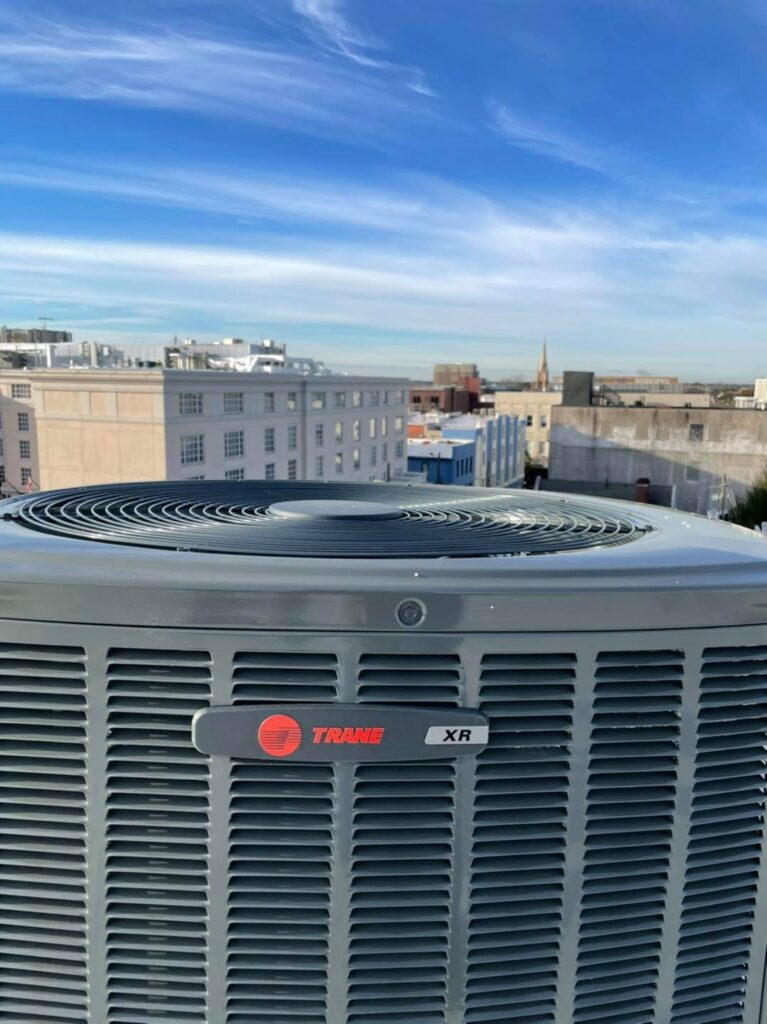
The Lowcountry climate adds urgency to this. Your air conditioning system will work harder over the next four months than it does during the rest of the year combined. Getting ahead of it in April is simply the smarter financial decision.
The Spring HVAC Checklist: What Needs to Happen Before Summer
Here’s what a thorough spring tune-up covers, both what you can do yourself and what requires a professional.
1. Replace Your Air Filter And Set a Schedule
This is the single easiest thing you can do, and the one most commonly skipped.
In Charleston’s climate, the 90-day filter replacement guidance on most packaging is misleading. Spring pollen seasons here are intense, a severely clogged filter restricts airflow, forcing the system to work harder and run longer to move the same amount of conditioned air, which stresses components and shortens system life.
Our standard recommendation for the Charleston area: check your filter every 30 days. Replace it when it looks gray or when you can’t see light through it. During peak spring pollen, typically late February through May. Many homes need a fresh filter every three to four weeks. Homes with pets are closer to monthly year-round.
Set a recurring reminder on your phone now. It takes two minutes and has an outsized impact on how well your system performs all summer.
2. Clean the Outdoor Condenser Unit
Your outdoor unit has been sitting through winter, collecting debris, leaves, pollen, and in coastal Charleston, salt deposits that accumulate year-round. Before summer cooling season begins, the condenser needs to be clean and clear.
What you can do yourself: turn the power off at the disconnect box near the unit, then rinse the exterior fins gently with a garden hose from the inside out. Clear any vegetation that has grown within two feet of the unit over winter. Don’t use a pressure washer. The fins bend easily and a bent fin reduces airflow.
What a technician does: a professional coil cleaning goes deeper than a garden hose can reach, using appropriate cleaning solutions to remove salt deposits, biological growth, and compacted debris from inside the coil assembly. For coastal properties, anything near Shem Creek, the waterfront in Mount Pleasant, or any of the barrier islands, professional coil cleaning at least once a year is essential. Salt air deposits reduce efficiency faster than most homeowners realize.
3. Clear and Flush the Condensate Drain Line
In Charleston’s humid climate, your air conditioning system removes a significant amount of moisture from the air during normal operation, on peak summer days, potentially several gallons per hour. All of that water exits through a condensate drain line, and in our warm conditions, algae and biological buildup accumulate in those lines throughout the year.
A blocked drain line backs up into the drain pan. When the pan overflows, you get water damage — in ceilings, walls, and flooring around the air handler. It’s one of the most preventable and most common water damage scenarios we see in Charleston homes every summer.
A professional maintenance visit includes flushing this line completely. Between visits, pouring a cup of distilled white vinegar down the drain line every few months slows the buildup. If your system suddenly shuts off for no apparent reason, check whether the float switch has tripped. That’s often a sign the drain pan is filling up.
4. Have Refrigerant Levels Checked
Low refrigerant is one of the most common reasons air conditioners struggle to keep up in peak summer heat, and it’s not something you can check yourself. Only a licensed technician with the right equipment can safely measure refrigerant charge and identify leaks.
Low refrigerant from a slow leak might not affect performance noticeably in April but leaves your system unable to cool adequately when outdoor temperatures peak in July. By that point, you’re dealing with an emergency repair during the busiest service period of the year.
If your system is running but your home isn’t reaching the thermostat setpoint during warm days, low refrigerant is often the culprit. Don’t wait until summer to find out.
5. Test All Electrical Components
Capacitors, contactors, and electrical connections are the most common failure points in Charleston area HVAC systems, and they tend to fail under load, meaning on the hottest days, when the system is working hardest.
A spring tune-up includes testing capacitor ratings (they degrade over time and a weak capacitor often predicts a future compressor failure), inspecting contactors for wear and pitting, tightening all electrical connections, and verifying that the system starts, runs, and shuts down correctly. None of this is visible from outside the unit. It requires opening the electrical compartment and testing with proper equipment.
If your system is 8 years or older, this step is especially important. Capacitor failure is one of the most common service calls we take during heat waves, and it’s almost always detectable in advance during a maintenance visit.
6. Verify Thermostat Operation and Settings
Before the heat arrives, confirm your thermostat is reading temperatures accurately, switching correctly between heating and cooling modes, and that any programmable or smart schedules are set appropriately for the season.
For heat pump systems, which are common throughout newer Charleston area construction, make sure the system is correctly switching from heat to cool mode. A reversing valve issue can cause the system to run in the wrong mode without being immediately obvious.
If you have a smart thermostat, spring is a good time to review your schedules and make sure they reflect your actual patterns, not the winter settings you set in November.
7. Inspect and Test the Full System
A complete spring maintenance visit should include a full system run test, watching the system start up, confirming airflow at every vent, checking temperature differential between supply and return air, and identifying anything that sounds, smells, or operates differently than it should.
For whole-home systems with multiple zones, each zone should be tested independently. For ductless mini-split systems, each head unit and its corresponding outdoor unit should be checked individually.

Additional Checklist for Vacation Rental Owners
If you own a short-term rental property anywhere in the Charleston area, Isle of Palms, Sullivan’s Island, Folly Beach, Kiawah, Seabrook, or anywhere along the coast, spring HVAC maintenance carries additional urgency because a breakdown doesn’t just affect your comfort. It affects your bookings, your reviews, and your revenue.
Charleston’s peak season runs from late spring through early fall, with Memorial Day weekend through Labor Day representing the densest stretch of bookings for most coastal properties. An HVAC failure during this window is a worst-case scenario: emergency repair rates, guests demanding refunds, and one-star reviews that linger on your listing long after the system is fixed.
Here’s what we recommend specifically for rental owners:
Schedule your spring tune-up before Memorial Day. HVAC companies across the Charleston area fill up fast as temperatures rise. If you wait until late May or June, you may be waiting a week or more for a non-emergency appointment, and by then your first summer guests may already be checking in.
Install a smart thermostat if you haven’t already. Smart thermostats allow you to monitor your system remotely, set temperature limits that prevent guests from running the system in ways that stress it, and get alerts if something isn’t right between guest stays. They’re one of the best investments a rental owner can make, and they typically pay for themselves quickly in reduced energy costs.
Check on the property between bookings. Systems that sit idle for a few days between guest stays can develop drain line clogs, refrigerant issues, or thermostat problems without anyone noticing. A brief walkthrough between bookings, or a check-in from a property manager, catches these issues before the next guests arrive.
Give us access to coordinate directly with your property manager. If you manage your rental remotely, we’re happy to coordinate scheduling and access directly with whoever is on the ground locally. You don’t need to be there for a maintenance visit.
Consider a maintenance plan. For rental owners especially, a twice-yearly maintenance agreement takes the scheduling off your plate entirely. We contact you when it’s time, show up, do the work, and report back. It’s the lowest-friction way to stay ahead of the season.
What Happens If You Skip It
We’re not in the business of scaring people, but this is worth saying plainly: the cost of skipping spring maintenance isn’t zero. It’s deferred and multiplied.
A tune-up that would have caught a failing capacitor in April becomes an emergency compressor replacement in July. A drain line flush that would have cost nothing extra during a maintenance visit becomes a water damage repair when the pan overflows into your ceiling. A refrigerant check that would have identified a slow leak becomes a full system failure when the compressor seizes from running low.
For rental owners, add the revenue cost: a cancelled booking week on Isle of Palms in July at peak rental rates is a significant number. A bad review that drops your property’s rating and suppresses future bookings costs more than that.
Spring maintenance is not exciting. It doesn’t feel urgent when the weather is pleasant and the system is running fine. But it’s one of the most straightforward returns on investment available to a Charleston area homeowner or rental property owner, and April is the right time to do it.
Schedule Your Spring Tune-Up Now
We’re booking spring maintenance appointments across the Charleston area now, serving Johns Island, James Island, West Ashley, Mount Pleasant, Daniel Island, Isle of Palms, Sullivan’s Island, Folly Beach, Kiawah Island, Seabrook Island, and all surrounding communities.
Appointments fill quickly as temperatures rise. If you’d like to get on the schedule before the summer rush, call us at (843) 834-0607 or fill out our online form. We offer free estimate on all new system installations.
Passion Heating & Air is a locally owned, family-run HVAC company serving the Charleston area since 2013. We have 120+ five-star Google reviews and offer transparent, upfront pricing on every service call.