
Short answer: AC freezing up is almost always caused by restricted airflow, low refrigerant, or a dirty evaporator coil.
In Charleston’s heat and humidity, it’s one of the most common summer emergencies and one of the most misunderstood. Here’s what’s actually happening and what to do about it.
It’s 95 degrees outside, your home feels like a sauna, and you walk outside to check your AC unit only to find it covered in ice. Ice. In the middle of a Charleston summer.
It seems impossible. It’s also more common than you’d think, and it’s one of the calls we get most often during July and August throughout the Charleston area.
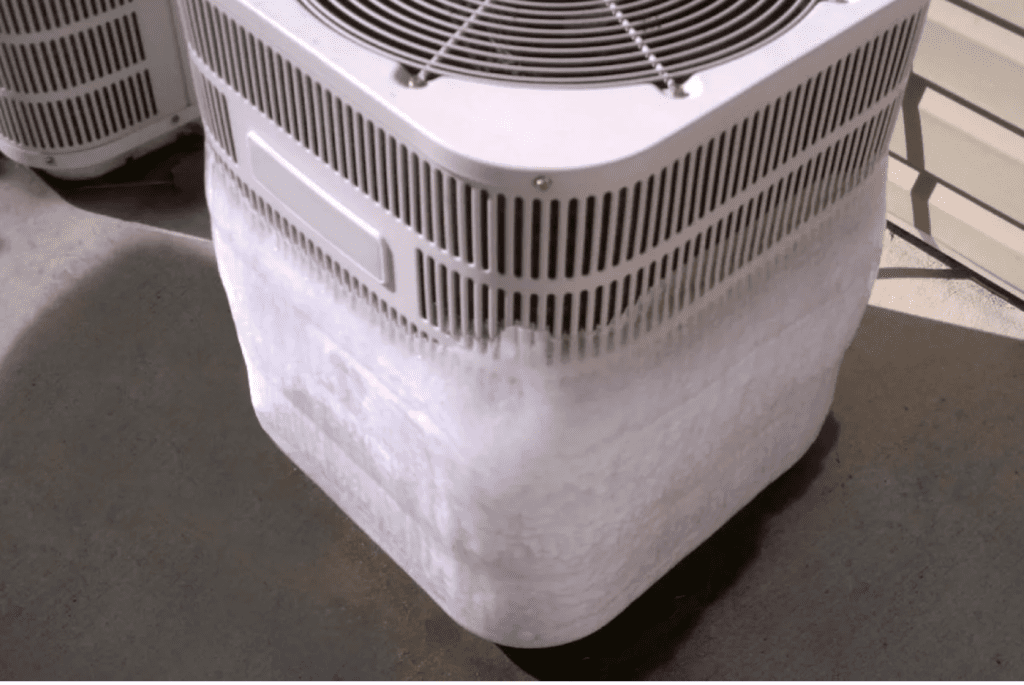
The frustrating part is that a frozen AC can’t actually cool your home. The ice blocks airflow through the system, which is the opposite of what you need when it’s sweltering outside. Understanding why it happens (and what to do immediately) can save you from a longer, more expensive repair.
What’s Actually Happening When Your AC Freezes
Your air conditioner works by moving warm air from inside your home across a set of coils filled with cold refrigerant. That process extracts heat and moisture from the air, which is what cools and dehumidifies your home.
For that process to work correctly, warm air has to keep moving across the coils continuously. When airflow slows or stops, for any reason, the coils get too cold. The moisture in the air (and in Charleston, there’s always plenty of moisture) freezes on contact with the coils. Ice builds up. The system loses its ability to cool. And you’re left standing in a hot house wondering what went wrong.
The Most Common Causes of a Frozen AC in Charleston
1. A Dirty or Clogged Air Filter
This is the most common cause, and the most preventable. When your air filter gets clogged, it restricts airflow across the evaporator coil. The coil gets colder than it should, moisture freezes on it, and ice builds up rapidly.
In Charleston’s humid, pollen-heavy environment, filters clog faster than in drier climates. If you’re changing your filter every three months like the packaging suggests, that may not be frequent enough here, especially during peak summer when the system runs almost continuously. Monthly filter checks during summer are worth the habit.
2. Low Refrigerant
Refrigerant is the substance that actually absorbs heat from your home’s air. When refrigerant levels are low, usually due to a leak somewhere in the system, the pressure in the coil drops. Lower pressure means lower temperature. The coil gets too cold, and ice forms.
This is a particularly sneaky cause because the system keeps running while the ice builds. Low refrigerant is also not something you can fix yourself. Adding refrigerant without finding and fixing the leak first is just a temporary patch that doesn’t address the real problem.
3. A Dirty Evaporator Coil
Even with a clean filter, the evaporator coil itself can accumulate a layer of dust, pollen, and grime over time. That buildup acts as insulation, preventing proper heat exchange and slowing airflow. The result is the same: the coil gets too cold and freezes over.
This is one of the reasons professional AC maintenance matters. A technician cleaning the evaporator coil during a tune-up is doing more than housekeeping. They’re preventing the chain of events that leads to a frozen system and an emergency call in the middle of August.
4. Blocked or Closed Vents
If supply or return vents are blocked by furniture, rugs, or closed off in unused rooms, airflow through the system becomes unbalanced. The coil doesn’t get enough warm air moving across it, and it freezes. This is a surprisingly common issue in Charleston’s older homes, which often have ductwork that wasn’t designed for today’s air conditioning loads.
5. A Malfunctioning Blower Fan
The blower fan is what pushes air across the evaporator coil and distributes conditioned air through your home. If the fan is running slowly, intermittently, or not at all, airflow across the coil drops dramatically. The coil freezes. If you can hear your system running but notice very little air coming from the vents, a blower issue may be the cause.
6. Running the AC When It’s Too Cold Outside
This one is less common in Charleston, but worth knowing: most central AC systems aren’t designed to run efficiently when outdoor temperatures drop below about 60°F. If you’re running the AC on an unusually cool night in early spring or late fall, the system can freeze up simply because the refrigerant isn’t operating within its intended temperature range.
What to Do Right Now If Your AC Is Frozen
Step 1: Turn the system off immediately.
Don’t keep running it hoping it’ll work itself out. A frozen AC running continuously can overheat the compressor, the most expensive component in the system. Switch your thermostat to OFF, not just fan-only.
Step 2: Let it thaw completely.
Depending on how much ice has built up, this can take anywhere from a few hours to a full day. You can speed up the process slightly by setting the thermostat to fan-only (not cooling), which moves air across the coil without running the compressor. Do not try to chip or melt the ice. That can damage the coil fins, which are thin and bend easily.
Step 3: Check your air filter.
While you’re waiting for the ice to thaw, check your filter. If it’s dirty, replace it before you turn the system back on. A clean filter is the cheapest and easiest fix if that’s the cause.
Step 4: Check your vents.
Walk through the house and make sure all supply and return vents are open and unobstructed. Move furniture, rugs, or anything else blocking airflow.
Step 5: Once thawed, turn the system back on and monitor it.
If the system cools normally and doesn’t freeze again within a few hours, a dirty filter or blocked airflow was likely the culprit. If it freezes again, or if you notice ice reforming, the cause is something that needs a professional, most likely low refrigerant or a failing component.
When to Call a Professional
You need a professional HVAC technician if:
- The system refreezes after thawing and replacing the filter
- You notice ice forming on the refrigerant lines (the copper lines running from the outdoor unit)
- Your energy bills have increased without explanation
- The system is running but your home isn’t getting cool
- You hear unusual sounds, hissing, bubbling, or rattling, from the indoor or outdoor unit
A hissing or bubbling sound in particular is a strong indicator of a refrigerant leak, which requires a certified technician to locate, repair, and recharge properly.
Why Charleston’s Climate Makes This Worse
Charleston’s combination of high heat, extreme humidity, and long cooling seasons creates conditions where frozen AC coils are more common and more consequential than in drier parts of the country.
Because the air here holds so much moisture, there’s more water vapor available to freeze on a coil that’s running too cold. And because our cooling season runs from April through October, sometimes longer, systems here accumulate wear and dirt faster than systems in climates with shorter summers.
A system that might go two or three years between maintenance visits in a drier climate can develop problems in a single season here. That’s not a sales pitch for maintenance. It’s just the reality of what Charleston’s climate does to equipment that isn’t kept up.
How to Prevent It
The good news is that frozen AC coils are largely preventable with basic maintenance:
- Change your air filter monthly during summer. In Charleston’s heat, your system runs hard and filters clog faster than the packaging suggests.
- Schedule professional maintenance twice a year: spring and fall. A technician will clean the coil, check refrigerant levels, inspect the blower, and catch the conditions that lead to freezing before they become emergencies.
- Keep vents open throughout the house. Closing vents in unused rooms doesn’t save energy. It creates airflow imbalances that stress the system.
- Don’t ignore warning signs. If your home feels warmer and more humid than usual, or if you notice reduced airflow from the vents, don’t wait for the system to fail completely.
If your AC is frozen or you’re dealing with a system that keeps cycling off without cooling your home, our team at Passion Heating & Air can diagnose and fix the problem quickly. We serve homeowners throughout the Charleston area, from West Ashley and James Island to Mount Pleasant, Johns Island, and the barrier islands.
Or call us at (843) 834-0607 — same-day service is often available during summer months.
Passion Heating & Air is a locally owned, family-run HVAC company serving the Charleston area since 2013. We have 120+ five-star Google reviews and offer transparent, upfront pricing on every service call.